
Plugin directory / Developer / dsh-model-gate
dsh-model-gate
Unverified OPaimon
What it does
A plugin in the Developer category for DeepSeek Harness.
Unverified — not yet verified
A plugin in the Developer category for DeepSeek Harness. Not yet verified — install and test it yourself.
“Unverified” means our automated CI has not yet installed this plugin. Feature descriptions and version compatibility are the author’s claims. This is not a security audit and not an endorsement of third-party code.
README
dsh-model-gate
English | 中文
Single-model disable gate for DSH. Deny whole provider routes or exactprovider/model pairs - denied models disappear from every discovery path and
any dispatch that still reaches them terminates with an in-protocolMODEL_DISABLED error chunk.
Non-destructive by design: nothing in your provider configuration or
credentials is touched. The denylist is an independent overlay; removing an
entry (or the plugin) restores everything exactly as it was.
Screenshots
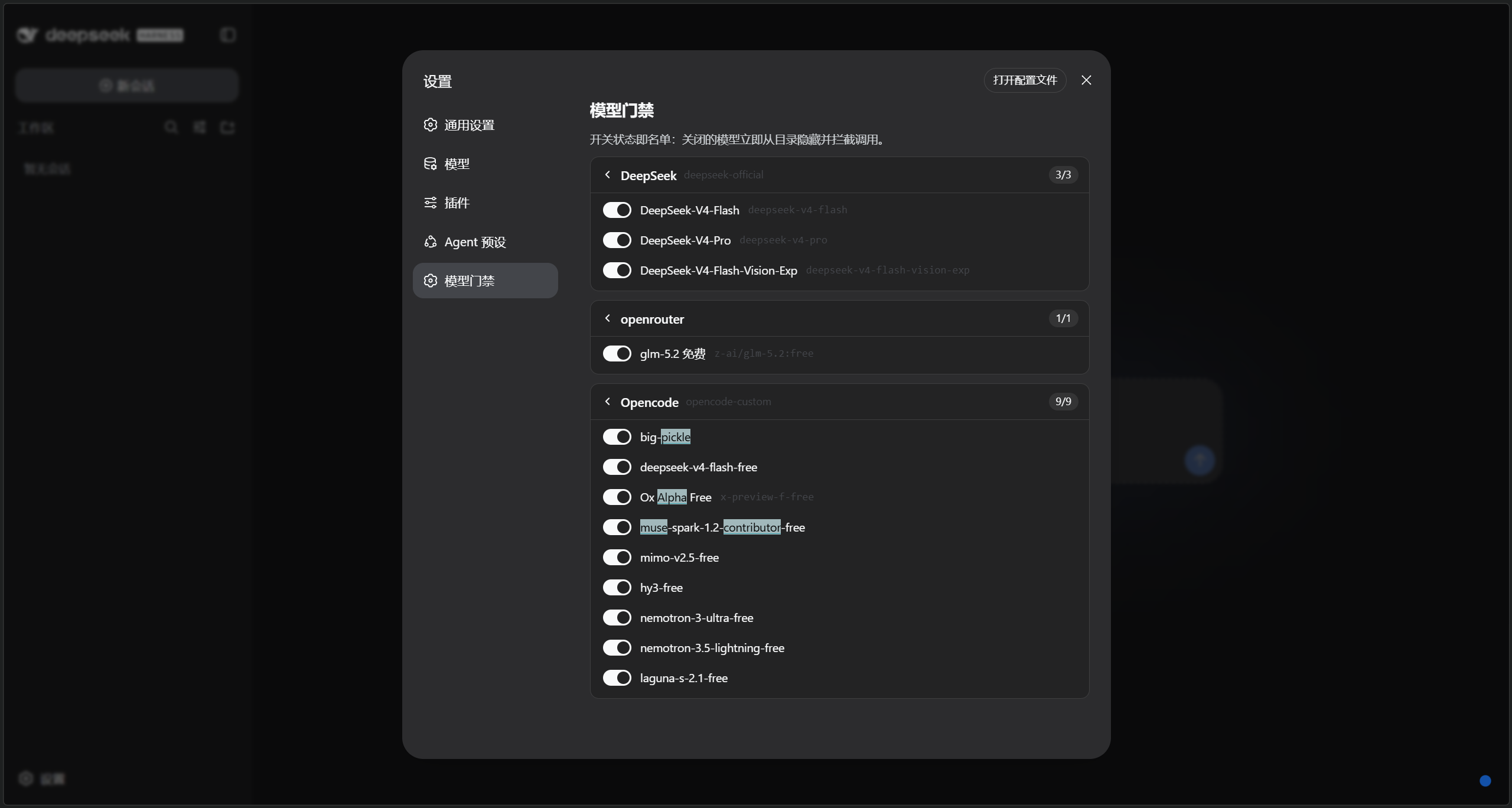
Settings panel — the「模型门禁」section reads the UNFILTERED catalog through
the plugin's own typert service: one collapsible group per provider, one switch
per model row, enabled-count badge on the group header.
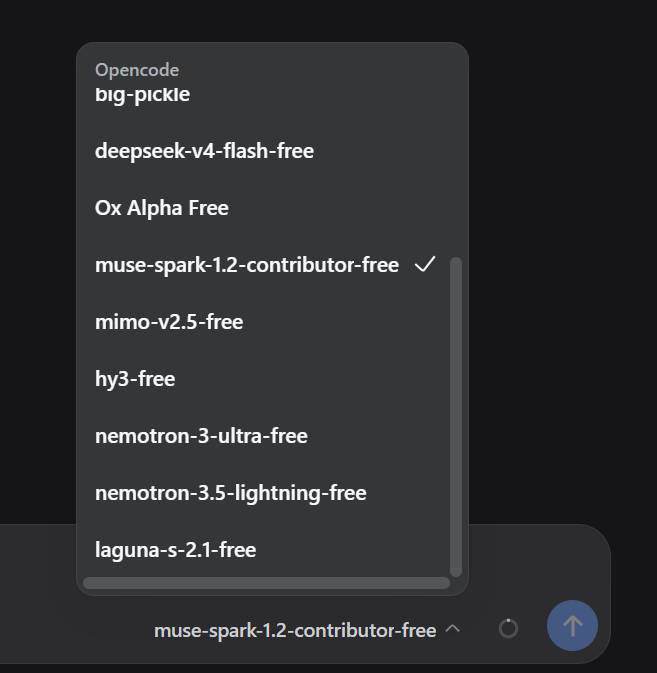
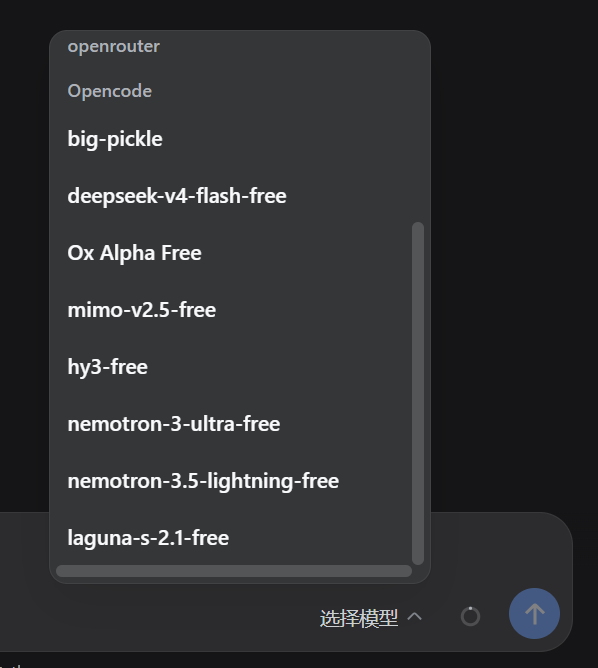
Discovery hiding — deny a model and it disappears from the web selector and
every other discovery path; the current selection clears with it.
| enabled | denied |
|---|---|
 |
 |
Dispatch backstop — a turn that still reaches a denied model (subagents,
session titles, stale references) ends with the in-protocol MODEL_DISABLED
error chunk; no network request is issued.

Install
From npm - one command:
dsh plugin --profile web add dsh-model-gate
Or from a Release tarball -
download dsh-model-gate-<version>.tgz, unpack it, and point the official
installer at the unpacked directory (the tgz ships prebuilt lib/, so no build
step and no pnpm allowBuilds prompt):
tar -xzf dsh-model-gate-0.1.2.tgz    # -> ./package/
dsh plugin --profile web add ./package
Then restart DSH once so the bundle layer picks up the new entry. Every
denylist edit afterwards hot-applies through settings - no further restarts.
Verified against DSH 0.1.x-rc.
Usage
Edit the denylist section in ~/.dsh/settings.yaml - changes hot-apply, no
restart:
llm-model-gate:
  disabledProviders:
    - openrouter
  disabledModels:
    - "*/kimi-k2.7-code"        # deny this model id on every provider
    - "token-rhythm/glm-5"      # deny one exact provider/model pair
Matching is exact and case-sensitive. A disabled provider route hides all of
its models. Model ids listed with a * + slash prefix are denied on every
provider, including dedicated routes (e.g. DeepSeek direct) that accept
explicit directory-external ids.
Settings UI
The web settings page has a dedicated「模型门禁」section (one collapsible group
per provider, one switch per model row). The panel reads the UNFILTERED
catalog through the plugin's own typert service, so currently denied models
render as off and can be turned back on; toggling writes the denylist through
the same hot-apply settings chain as manual YAML editing.
Row-state notes:
- A row is off when its exact pair, a
*/modelstar rule, or the whole
provider route denies it; the reason is tagged on the row. - Turning a star-denied row back on removes the covering star rule for every
provider (the denylist has no per-provider exceptions); the panel re-renders
from the returned state, so affected rows visibly flip together. - Provider headers show an enabled-count badge; row switches are authoritative.
Semantics
- Discovery (primary): the web selector,
session.models/llm.models
catalogs,task_models, and API request validation all read the filtered
view - a disabled model behaves as if it had never been configured.
Re-enable and it reappears on the next refresh. - Dispatch (backstop): any path that still dispatches a denied model -
subagents, session-title, custom routing, explicit ids - is stopped at the
publicllm/streamwaterfall with a single terminalfinish{kind:"error", code:"MODEL_DISABLED"}chunk. The turn ends with a
normal model error; no network request is issued. - If the disabled model is the current session or default model, the next
request on it fails; nothing switches automatically. Failover-style plugins
listening onagent/request-errorcompose naturally.
Boundaries
- Vision-router clones are separate route keys: disabling
openrouterdoes
not disableopenrouter-vision- list both if you want both. - Providers stay installed; only their public listing is filtered. Provider
configuration surfaces (adding/editing providers) are unaffected. - Bypassing the DSH LLM service entirely (direct HTTP) is outside DSH.
- Uninstalling removes the bundle entry; the plugin restores the native
listProviders/listModelsmethods on unload with zero residue. A
leftover denylist section insettings.yamlis harmless.
License
MIT. An independently distributed plugin: DSH itself is untouched
and keeps its own license.
Development
bash scripts/build.sh     # requires DSH_CHECKOUT or ~/dsh-harness; also shims node_modules/.bin/tsdown
npm run build:client      # bundle src/client/main.tsx -> lib/client.js (ModuleLoader wrapper)
npm test                  # unit tests (node:test) against lib/ - run the build first on a fresh clone
Tests import the compiled lib/ outputs (relative ESM imports in source need
tsc's .js rewriting, which node's type stripping does not perform), which
resolves the host packages through the symlinks that scripts/build.sh
creates - run the build first on a fresh clone.
Inside a super-injector environment: dev_inject_plugin <this dir> thendev_reload_package to iterate without restarting.
Install
Install the catalog once, then DeepSeek Harness can find and install any plugin from this site automatically:
dsh plugin add dshbase-catalogThen say "install dsh-model-gate for me" — your agent finds it in the directory and installs it. Docs: dshbase-catalog · verified packs.
This plugin is GitHub source (not published to npm) — install it straight from the repo:
Web profile:
dsh plugin --profile web add github:OPaimon/dsh-model-gateHeadless (CLI) profile:
dsh plugin --profile headless add github:OPaimon/dsh-model-gateTest report
Not yet L3-verified — see failure note below if we already ran it.
Share this badge
Drop this badge into your README — it links back here and updates automatically when our test status changes:

[](https://dshbase.com/plugins/dsh-model-gate/)<a href="https://dshbase.com/plugins/dsh-model-gate/"><img src="https://dshbase.com/badges/dsh-model-gate.svg" alt="dshbase listed"></a>